
Fish is a strong source of protein and omega-3 fats. On paper, it looks ideal.
The reality is murky.
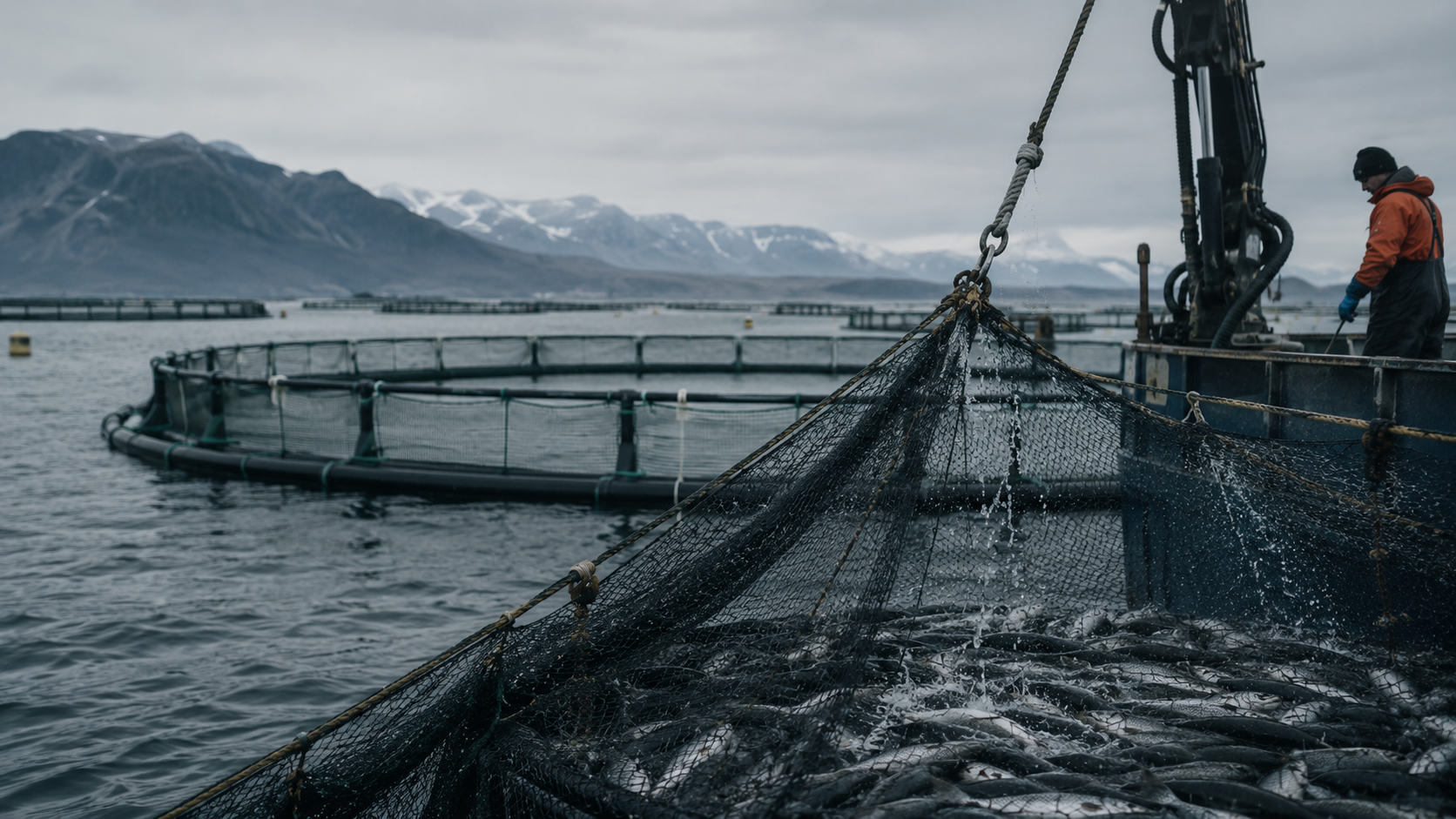
Much of the fish used in pet food is farmed. Intensive aquaculture relies on high-density production systems that require feed manipulation, disease control and chemical inputs to maintain fish health and viability as a food. This is to maximize output.
The reality of industrial fish farms is not that different from how livestock are raised. It gets back to a hard truth: to raise animals for food, at scale, there’s a lot of human intervention necessary.
Further down the supply chain, in pet food, there are three interdependant goals: shelf life, volume and profit. One affects the other, and so each is important.
So between industrial fishing and pet food manufacturing, there is a general consensus to create as much low-cost fish meal as possible and to perserve these large volumes for as long as possible. Which leaves us to ethoxyquin.
To prevent oxidation during transport and storage, fish meal is commonly preserved with ethoxyquin, a synthetic antioxidant.
Ethoxyquin is approved for use in the United States within regulatory limits. It has been restricted or banned in parts of Europe. It is conditionally approved in Australia and Asia, and pretty commonplace in Singapore. Its safety profile has been debated for decades. Studies link it to liver damage in dogs, and in 2025, the Center For Veterinary Medicine in the United States required it, for the first time, to be included on a pet food label.
But when ethoxyquin is added to fish meal by a supplier before it reaches the pet food manufacturer, it is frequently treated as a pre-existing preservative in the ingredient stream. So it's an unknown, both its presence in the fish meal and the levels at which it's present. Pet food brands now actively market “no ethoxyquin added” or “ethoxyquin-free fish meal" – but these brands aren't the ones casting the fishing nets.
The grand result is not very consumer-friendly: a finished pet food label that does not reliably list whether the fish was preserved with ethoxyquin or not.
Cynically, this is another example of how pet food came to be such an engine for profit. When using whatever means necessary to improve shelflife. being transparent erodes margins. Beyond preservatives, marine ingredients also carry known risks of heavy metal accumulation. Regulatory limits exist, but contamination is a structural reality of pet food marine sourcing.
Fish can be an excellent ingredient. But it arrives in your pet's bowl with a history.
A series on protein in pet food