
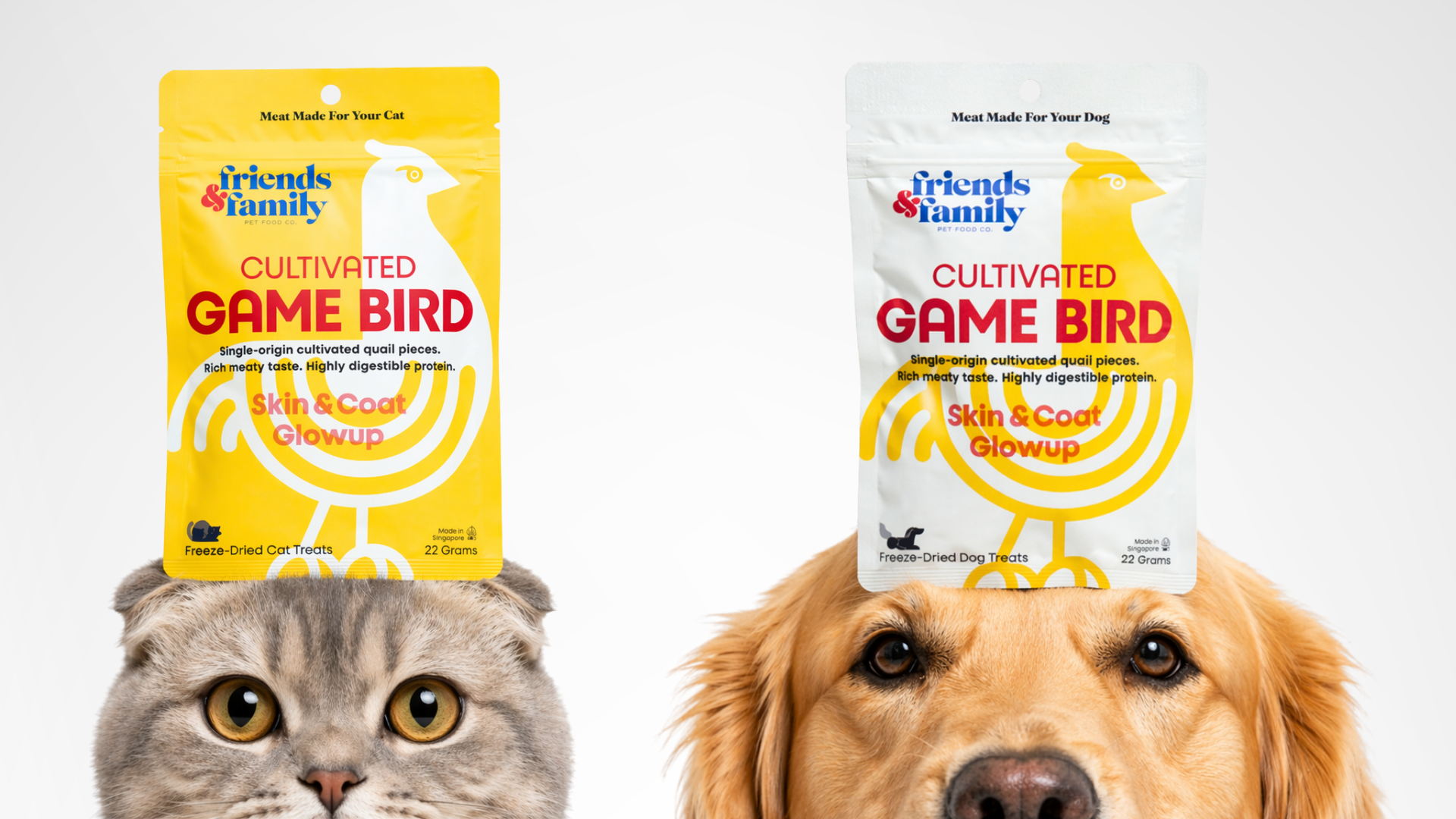
For decades, commercial pet food has relied on a basic formula: meat from industrial supply chains, processed at high heat, and then fortified with supplements to make up for lost or inconsistent nutrients.
That model worked for a very long time – more than 70 years – and is still in use today.
Commercial pet food has sustained cats and dogs for more than 70 years. The system clearly works. But much has changed in 70 years, including how we view our pets. As we like to say, our pets are now friends and family, and we feed them accordingly. So the question cultivated meat asks is whether it can work better.
How Is conventional pet food produced?
The conventional pet food supply chain starts on industrial farms and passes through several rounds of processing before it even reaches a pet food manufacturing facility. Processed meat is then supplemented with synthetic and isolated nutrients after production, because heat-sensitive vitamins, amino acids, and fatty acids are often damaged or destroyed by the processing steps.
How does cultivated meat work differently?
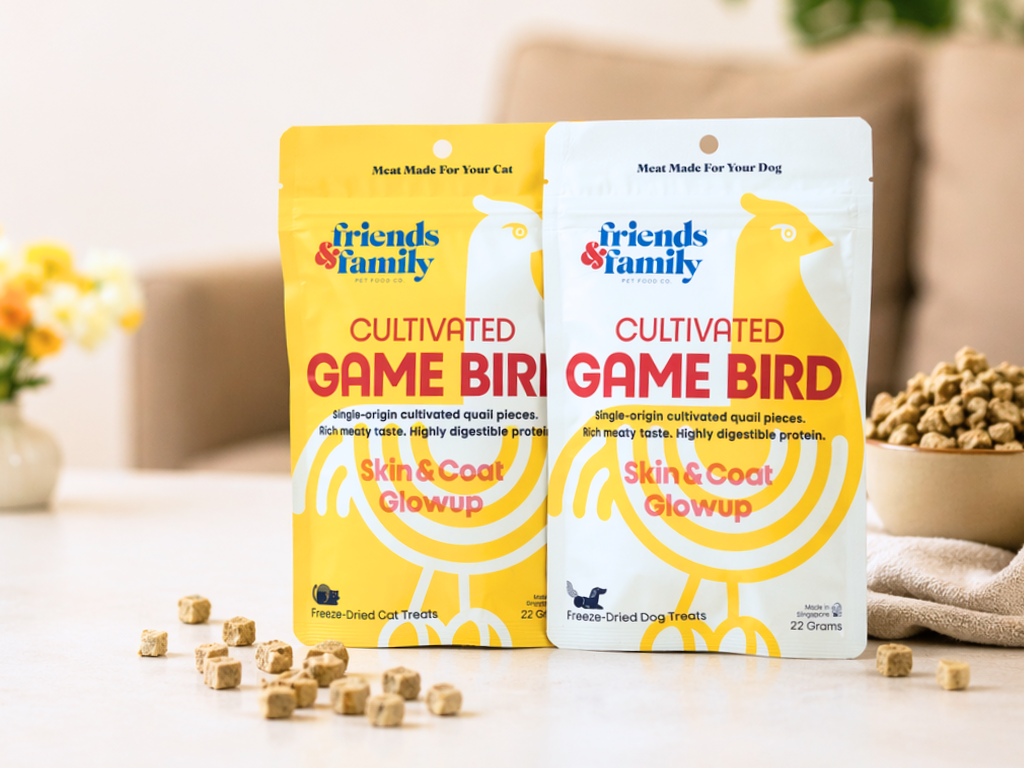
Cultivated meat is made in a controlled environment, so it skips rendering, high-heat kill steps and extended supply chain handling. Naturally occurring nutrients can remain intact.
How do cultivated and conventional pet food compare?
|
Quality Factor |
Conventional Meat in Pet Food |
Friends & Family Cultivated Meat |
|
Nutrition |
Nutrients can be lost during rendering and high-heat processing, then added back post-production via synthetic supplement blends. |
Produced in a controlled environment and delivered fresh, so naturally occurring vitamins, fatty acids, and amino acids remain intact. |
|
Consistency |
Byproducts, meals, and lower-grade cuts vary in nutrient content. Multiple species and parts can enter a single meal ingredient. |
Every batch is single-origin animal protein, designed and tested for nutritional precision before it leaves the facility. |
|
Supplementation |
Nutrients damaged or destroyed by processing are replaced with a post-processing blend of synthetic and isolated nutrients. |
The ultimate goal is cultivated meat serves as the only ingredient, complete and balanced without supplementation. |
|
Safety |
Large-scale animal rearing requires antibiotics, hormones, and other pharmaceuticals to manage disease in confined conditions. |
Produced in a controlled environment, without antibiotics or animal pharmaceuticals. GMO-free. |
|
Traceability |
Byproduct and meal ingredients are difficult to trace. Different parts and species can enter a single ingredient without disclosure. |
Single-origin protein, traceable to one selected animal per batch. |
Read more about how Friends & Family produces cultivated meat on our FAQ page.
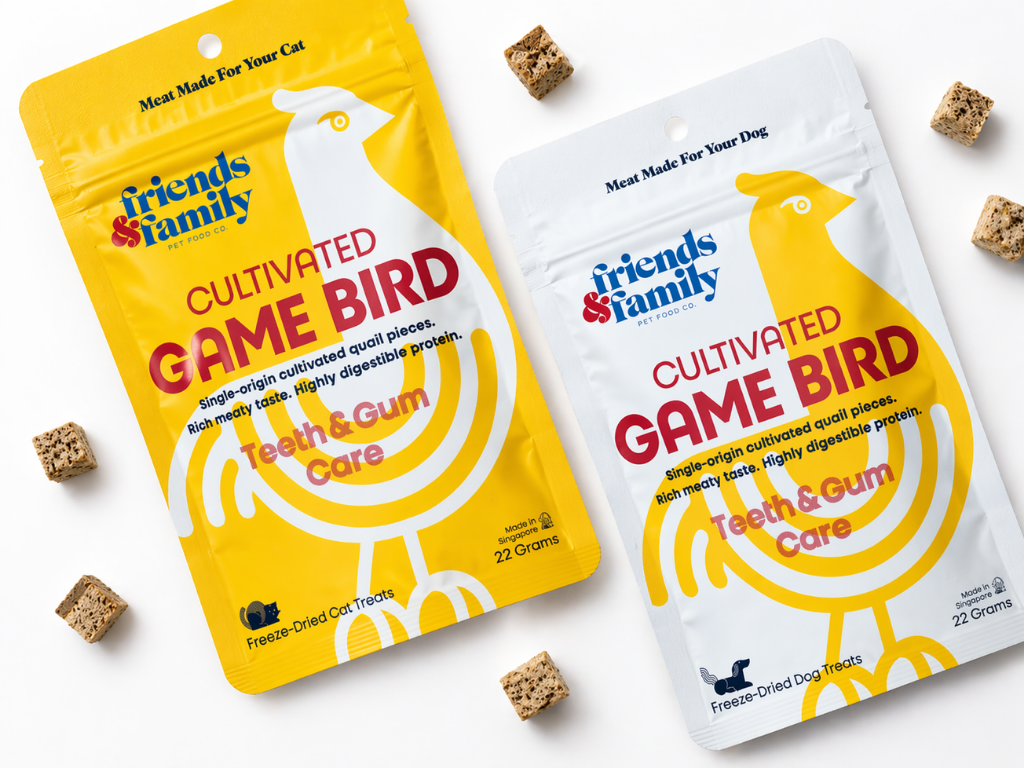
Ready to try cultivated meat for your pet? Shop the Kampong Select range at friendsandfamily.pet.